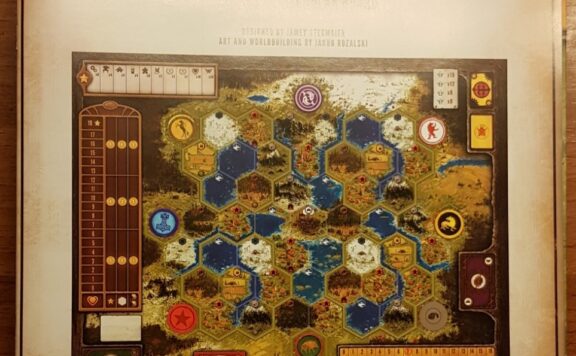
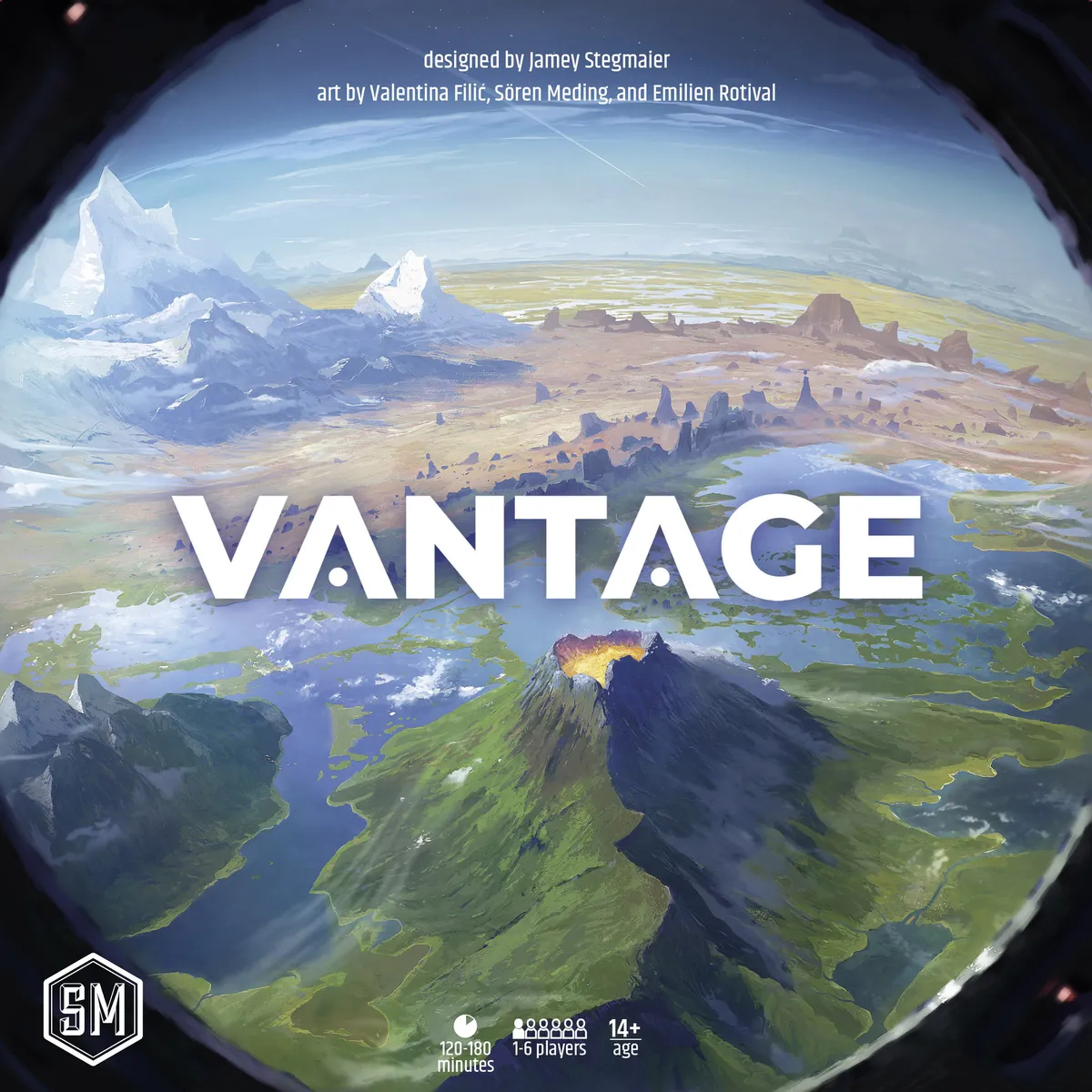
Vantage, designed by Jamie Stegmeier and published by Stonemaier Games, is one of the most ambitious and unconventional open-world board games ever produced. Rejecting the traditional rely-on-cards-and-booklets paradigm of standard adventure games, Vantage presents an enormous planet for players to explore using a sprawling, seamless visual grid system. Set against a backdrop of crash-landing on an uncharted alien world, it delivers an immersive sandbox experience that feels closer to a classic open-world video game (like The Elder Scrolls or No Man’s Sky) translated directly onto a tabletop.
Components
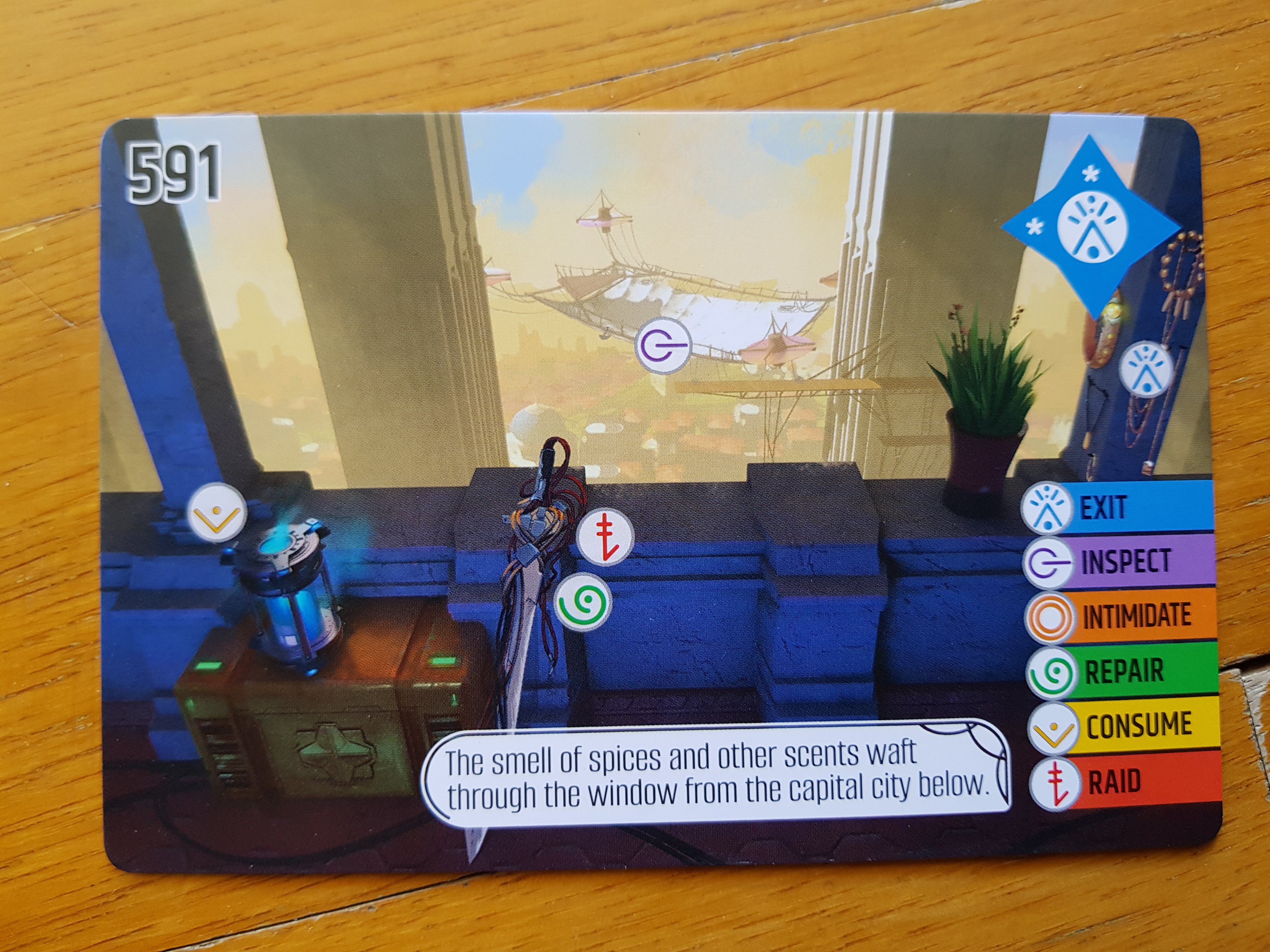
The production of Vantage is a massive technical and artistic accomplishment. The box is packed with over a thousand oversized cards, each featuring gorgeous, panoramic landscape and location artwork. Rather than relying heavily on narrative text blocks, the visual art itself conveys the environment, terrain, and points of interest.
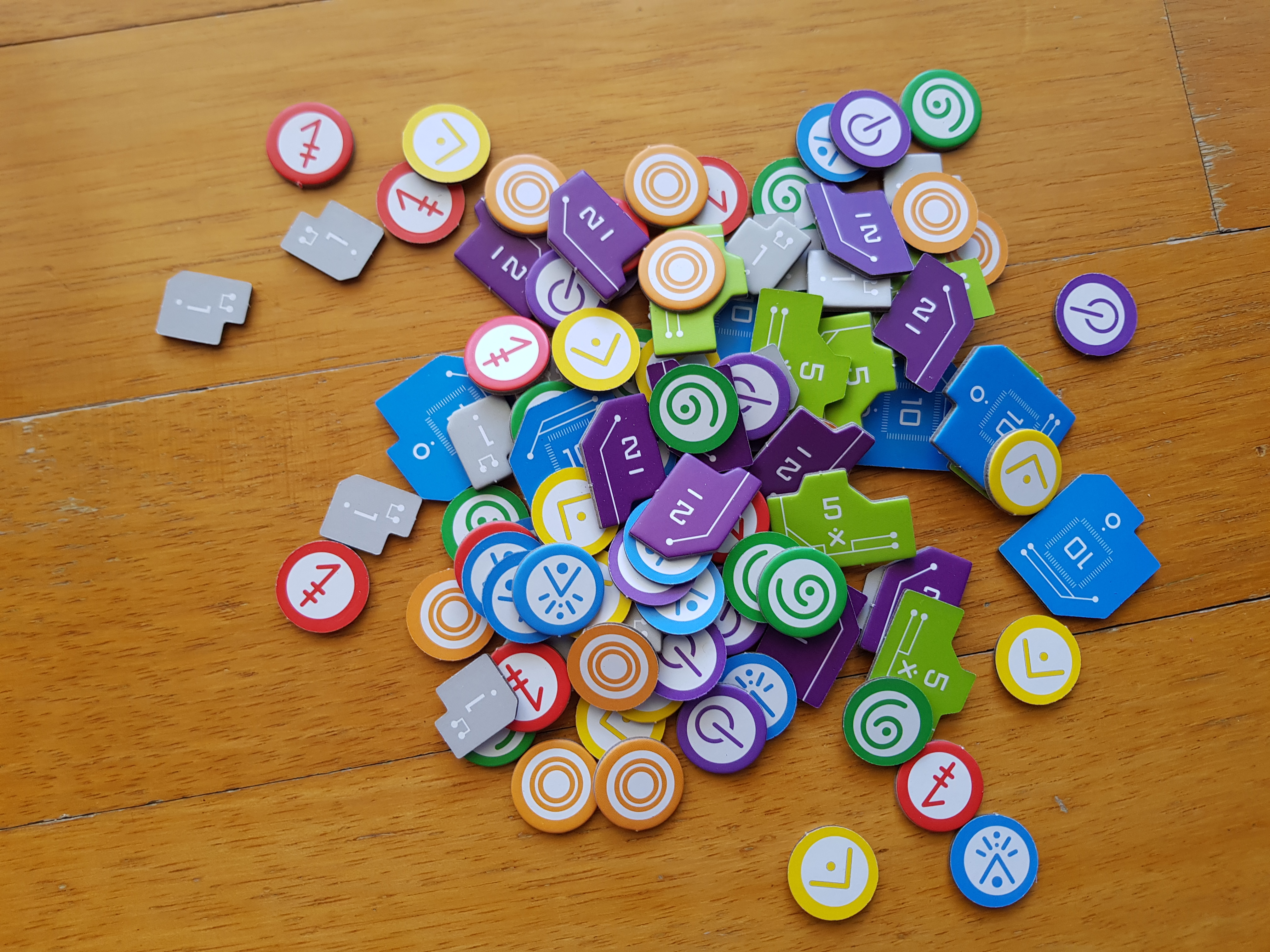
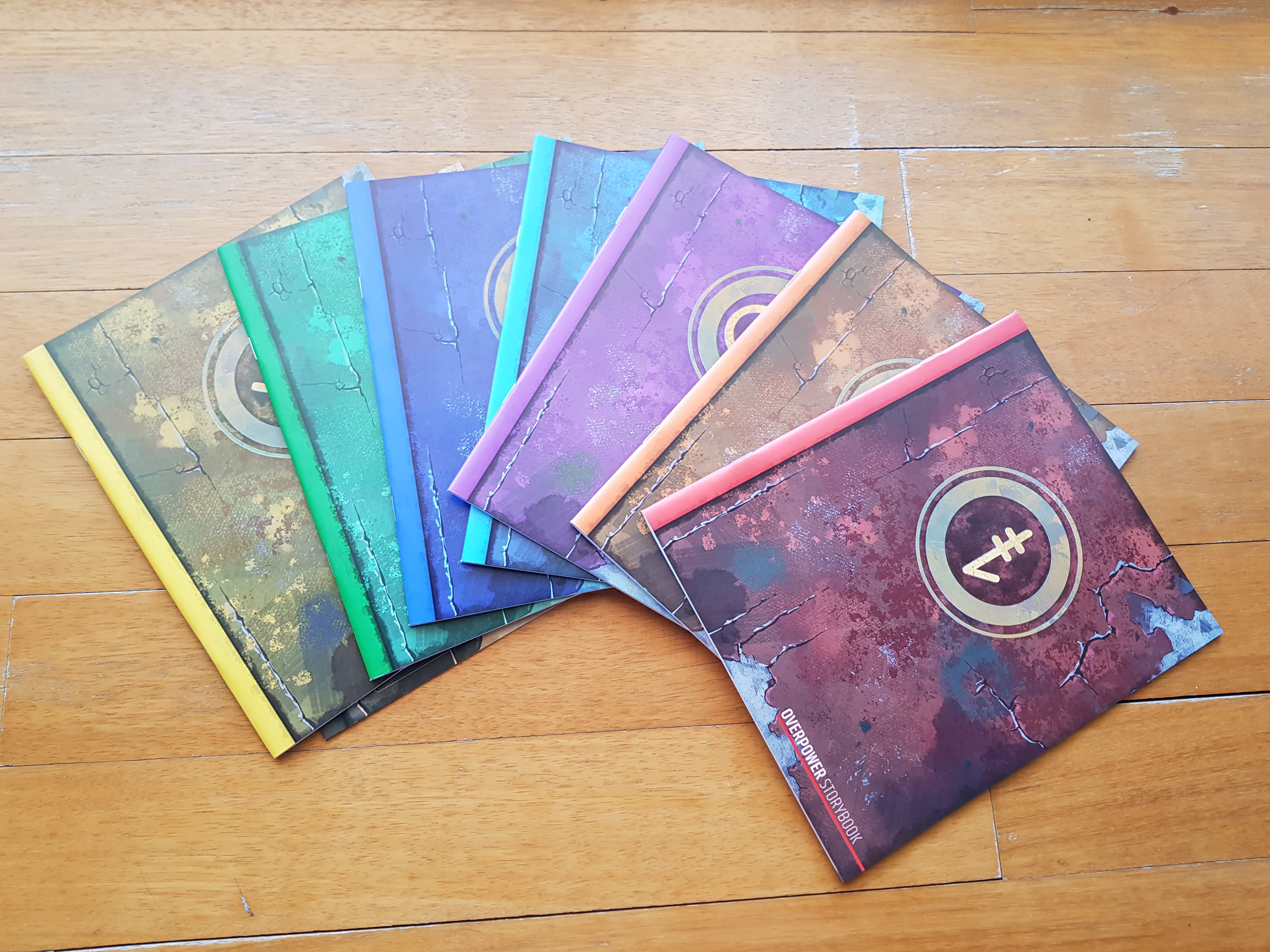
The individual player dashboards, custom dice, tokens, and tracking meters are all designed with high functionality in mind. The storage solution—a necessity given the sheer volume of location and interaction cards—is well-engineered, allowing for reasonably smooth setup and teardown once you understand the indexing system. Cards (and indeed there are lots of them) are easy to find, as they are organized by their unique number and every used card goes back in the box it its unique position.
You must have in mind that this game will require quite a lot of space on your table. Although the center gameboard is rather small, you must have in close proximity all the story books, the book of secrets, book of vantages, tokens and the box with all location cards so gaming space might be an issue. The box is also one of the heaviest i ever encountered, weighing approximately 5kgs.
9/10
Gameplay
At its core, Vantage operates on a unique spatial and visual direction system. Players move across an alien terrain by choosing directions (North, South, East, West, or interacting with points of interest directly in view) and drawing the corresponding location card to update their “vantage” point.
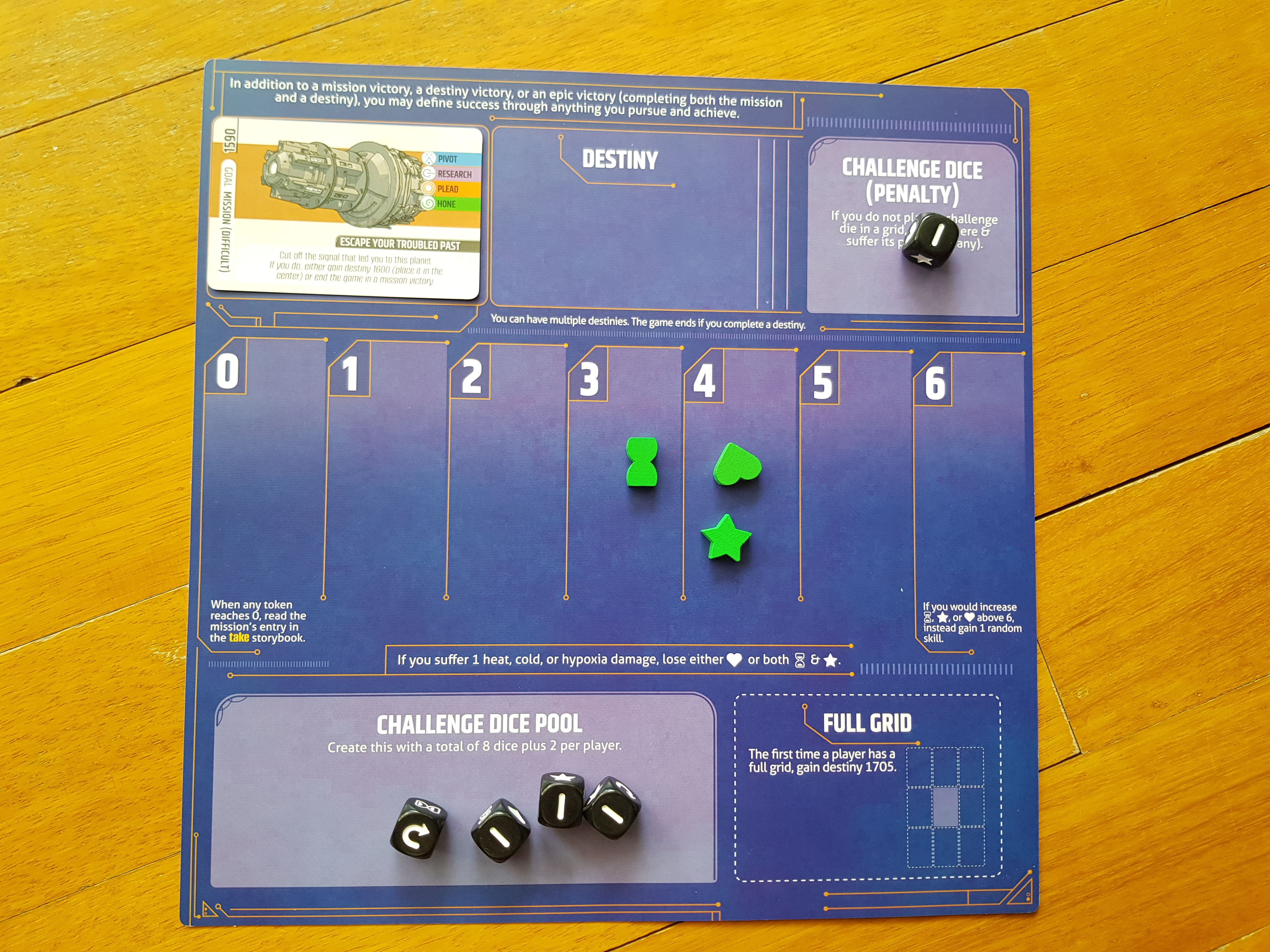
Actions are managed through a combination of stamina/resource management, skill checks, and tactical choices. As you explore, you will harvest alien flora, interact with wildlife, uncover ancient ruins, construct survival gear, and attempt to fulfill personal or group objectives to survive and ultimately escape or adapt to the planet. The core loop is driven entirely by player curiosity: if you see a strange structure on the horizon of your current card, you can simply walk toward it.
I have never played a game like this before and the experience was really unique. There is no direct communication with other players as each of them crash-land in another location. However you are allowed to describe what you see to the other players and take decisions together as a party. You can also help each other in a lot od ways, for example:
- Players can use matching skill tokens from the shared pool to help lower the dice cost of an action for the active player before they roll.
- Certain cards and mission actions grant benefits, resources, or progression steps that aid all players simultaneously.
- If two players meet at the same location card, they can directly share and trade location-based information, items, or advantages that are otherwise locked to solo explorers
The unique feeling of really not knowing what the future holds for you, what strange creatures or difficult weather condition you might encounter is very close to what you would really feel in real conditions and that sense creates an atmosphere that you will absolutely love. Every mechanic in the game is well thought and executed and it seems logical that this game took 8 whole years to design, develop and playtest.
Playing the game solo is maybe the best experience you could have but if you like company one more player is ideal. With more players, gameplay seems to expand a lot due to conversations about decision-making that can drag and cause much downtime.
8/10
Replayability
The planet contains hundreds of unique locations, branching paths, hidden secrets, and multiple distinct storylines or win conditions. Because a single play session will only expose you to a tiny fraction of the world map, subsequent games offer completely new regions to discover or alternative ways to approach previously visited locations. Furthermore, the combination of variable starting locations, different character abilities, and random encounter elements ensures no two campaigns or standalone sessions feel identical.
Playing solo or playing with friends provides a slightly different feel but each one is very rewarding in its own way. On your own, you will feel more curious, more helpless and you will have double thoughts about everything. In many ways it will be like you are a castaway in a desolate island. Playing with others, you will feel a bit more secure and you will be able to chit chat about everything, ask for help and share your thoughts about each situation. Replayability either way will be extremely high if you like adventures in an open world and science fiction. I am already eager to play another game of Vantage so I can learn a bit more about this strange planet. 9/10
Learning Curve
Vantage carries a moderate-to-heavy learning curve, but not in the traditional sense of complex rulebooks. The fundamental turn actions are relatively simple to grasp. However, the game demands a shift in mindset: players must learn how to “read” the visual landscape cues and manage the indexing system efficiently without getting overwhelmed by options. The rulebook is structured well, but the first game or two will inevitably involve frequent checks to ensure movement, line-of-sight rules, and state-tracking are handled correctly. 6/10
Theme
The theme of survival and exploration on a breathtaking, mysterious alien world is executed flawlessly. By relying on visual cues rather than dense paragraphs of flavor text, Vantage creates an immediate sense of isolation, wonder, and discovery. Every new card drawn feels like looking through the visor of your space suit at a landmark you haven’t seen before. The atmosphere balances the quiet beauty of an untouched world with the constant threat of dangerous wildlife and harsh environments. The theme plays an major role in this game and is one of its greatest assets in contrast to most of board games currently in the market. 10/10
Player Interaction
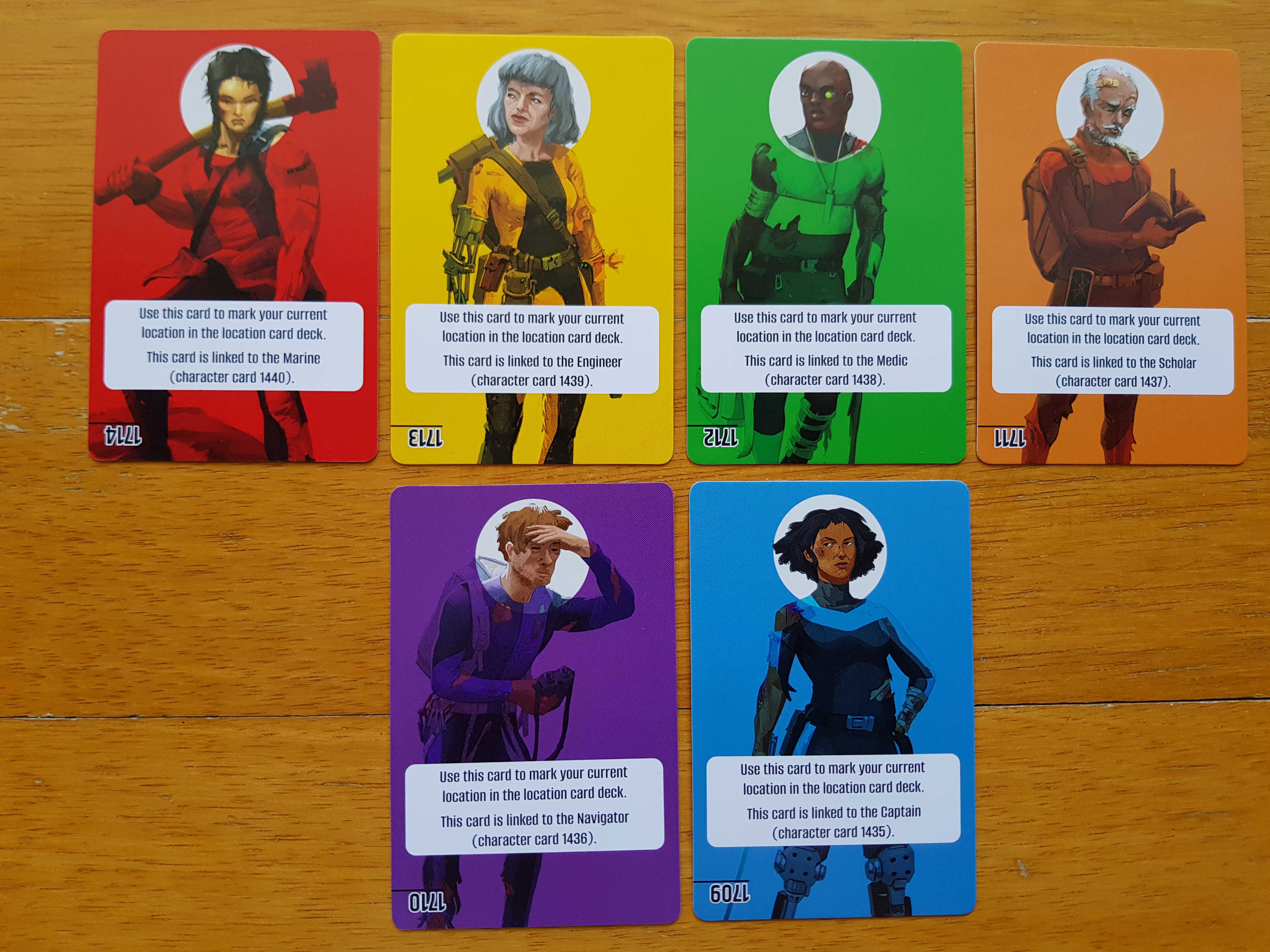
Player interaction varies depending on your chosen mode. Vantage can be played fully cooperatively or competitively, but its sweet spot lies in shared exploration. Players can travel together to tackle major challenges and share resources, or split up to cover more ground across the planet, communicating remotely about what they see on their respective horizons. While direct conflict is minimal, coordination and strategic division of labor are crucial to group success. 7/10
Final Thoughts
Vantage is a extremely well-crafted combination of tabletop game design and visual storytelling. It delivers on the promise of a true open-world sandbox board game without sacrificing mechanical integrity or thematic depth. While the physical size, setup, and mental overhead of tracking a vast world might not suit casual gaming sessions, it is an absolute masterpiece for fans of exploration, spatial puzzles, and immersive thematic adventures.